Editorial Picks
The 10 Best Korean BBQ Restaurants in Seoul
A countrywide editorial pick of ten Seoul Korean BBQ destinations — institutional hanwoo galbi, premium dry-aged houses, charcoal-grill mid-tier, and late-night specialists, framed for the family-travelling international patient building a multi-day Korean itinerary.
Most international visitor guides to Seoul Korean BBQ default to a single neighbourhood frame — Gangnam, or Itaewon, or Hongdae — and within that frame to a single price tier. The default is defensible at the convenience level. It fails, however, at the planning level, because the family-travelling international patient I write for is increasingly building multi-day Korean itineraries that move across several Seoul districts, anchoring each day in a different neighbourhood cluster — a Gangnam day for the clinic appointment, a Jung-gu day for the palaces, a Yongsan day for the museum walk, a Mapo evening for the night-eating belt — and that planner needs a Korean BBQ guide framed across the whole city rather than within one district. This page reads ten Seoul Korean BBQ destinations across four useful planning categories: institutional hanwoo galbi houses with two-to-five-decade lineage, premium dry-aged and contemporary-grill restaurants frequently covered in international press, mid-tier charcoal-grill addresses for casual dinners, and late-night specialists for travellers whose flight or treatment schedule shifts the meal window past most kitchens' last orders. All ten entries have been verified against current Korean tourism authority listings, the MICHELIN Guide Seoul where applicable, and operator-direct address confirmation. Price ranges are stated in KRW with USD conversions for international planning use. The editorial position is descriptive rather than ranked; the order is alphabetical within the featured set, and the right choice for any given evening depends on the neighbourhood you are anchored in, the budget tier you are working from, and the kind of BBQ texture — galbi, samgyeopsal, dry-aged steak, charcoal-grill, wood-fired — the meal is for.
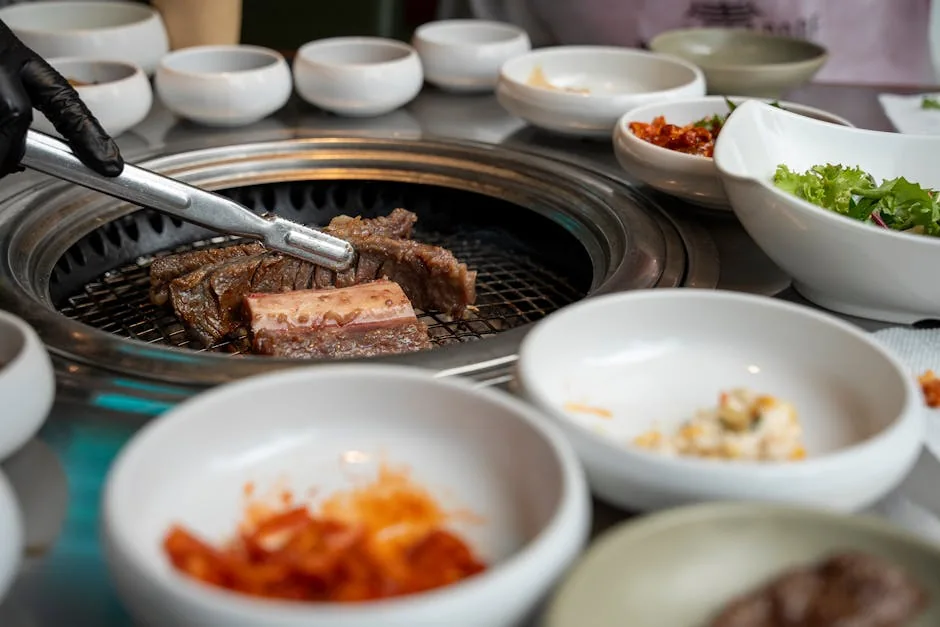
Featured A — Samwon Garden (Apgujeong, hanwoo galbi institution)
Samwon Garden is the institutional choice for premium hanwoo galbi in the Apgujeong cluster, operating since 1976 and listed in the MICHELIN Guide Seoul. The address is 835 Eonju-ro, Gangnam-gu, a seven-minute walk from Apgujeong Station on Line 3. The price range sits at KRW 40,000 to 80,000 per person (approximately USD 30 to USD 60 at the prevailing exchange rate), which places Samwon Garden firmly in the upper-mid premium tier rather than the very top of the hanwoo range. The garden-style compound — the format the restaurant has held for nearly five decades — favours formal family dining over the open-grill street style; reservations are taken by phone (+82-2-548-3030) or through NaverPlace, English menus are available, and the kitchen runs Monday through Saturday from 11:30 to 22:00 and Sunday from 11:30 to 21:30. For the family-travelling reader building a Gangnam-anchored itinerary, Samwon Garden is the milestone-meal address: the venue Korean families choose for birthdays, anniversaries, and visiting-relative dinners, and the venue the MICHELIN inspectors have continued to list across multiple guide cycles. Source: VisitKorea, MICHELIN Guide, Taste Korean Food editorial coverage.
Featured B — Byeokje Galbi Cheongdam (vertically integrated hanwoo)
Byeokje Galbi is one of the longest-running hanwoo-galbi houses in Seoul and is regularly featured in MICHELIN Guide Korea coverage. The Cheongdam branch — in the Cheongdam-dong area of Gangnam-gu — follows the company's vertical-supply model, sourcing hanwoo through Byeokje's own beef-trading network rather than through external wholesalers, and the seating layout favours family-room private dining over the open-grill street style common to mid-tier galbi houses. The price range sits at KRW 60,000 to 120,000 per person (approximately USD 45 to USD 90), which places the Cheongdam branch in the upper-premium hanwoo tier alongside the Bangi flagship. Operating hours run daily from 11:30 to 22:30 with last orders typically taken an hour before close; reservations are strongly recommended and accepted by phone at +82-2-548-0085. English menus are available, the staff have working international-patient familiarity, and the room style — wood-panelled private booths, ondol-floor seating in some compartments — reads closer to traditional Korean fine dining than to the contemporary grill aesthetic of the newer dry-aged houses. For Cheongdam-anchored evenings, this is the address that pairs naturally with a Gangnam clinic-day itinerary. Source: Visit Seoul Korean BBQ guide 2025, Corner Inc hanwoo BBQ feature.
Featured C — Geumdwaeji Sikdang (Sindang, dry-aged samgyeopsal specialist)
Geumdwaeji Sikdang is the internationally recognised specialist of thick-cut, dry-aged samgyeopsal in central Seoul, located at 149 Dasan-ro, Jung-gu, in the Sindang-dong cluster one subway stop east of Euljiro. The price range sits at KRW 25,000 to 45,000 per person (approximately USD 19 to USD 34), which makes Geumdwaeji the most reachable entry in the contemporary dry-aged pork category — meaningfully below the premium hanwoo tier, but materially above casual chain pork-BBQ pricing. The restaurant has been cited in Eater Seoul, CNN Travel, the New York Times' 36 Hours Seoul column, and is the practice that effectively defined the dry-aged-samgyeopsal trend as it spread across Korean BBQ menus in the late 2010s. Operating hours run 11:30 to 23:00 daily; reservations are managed through the Tablling ticketing app rather than phone — international visitors typically arrive 30 to 60 minutes before opening, or use the Tablling app to take a queue slot. Wait times of one to two hours are common on weekend evenings; the international press visibility has produced a queue dynamic that has not eased meaningfully over the past five years. English menus are available, and the staff are accustomed to international-tourist intake. Source: Eater Seoul, CNN Travel, NYT 36 Hours Seoul.
Featured D — Maple Tree House Itaewon (foreigner-friendly hanwoo galbi)
Maple Tree House is the upscale hanwoo galbi address most consistently recommended for first-time foreign visitors to Seoul, located in the foreigner-friendly Itaewon cluster at 26 Itaewon-ro 27ga-gil, Yongsan-gu, behind the Hamilton Hotel. The price range sits at KRW 45,000 to 75,000 per person (approximately USD 34 to USD 56), which places Maple Tree House in the upper-mid hanwoo tier — comparable to Samwon Garden, somewhat below Byeokje Cheongdam, materially above mid-tier charcoal-grill addresses. Operating hours run 11:30 to 22:30 daily. The language support is the most comprehensive of any address in this guide: English, Korean, Japanese, and Mandarin menus and staff, with English-fluent service as the operational default rather than as an accommodation. The room style — clean contemporary grill aesthetic, table-side server-managed grilling, banchan service handled bilingually — reads as the version of Korean BBQ designed for international guests who have not previously navigated a Korean grill table. For the family-travelling reader on a first Seoul trip, or for groups where one or more members are not comfortable with Korean-only intake, Maple Tree House is the address that removes the language-friction layer without dropping the hanwoo quality tier. Source: VisitKorea, Time Out Seoul Korean BBQ guide.
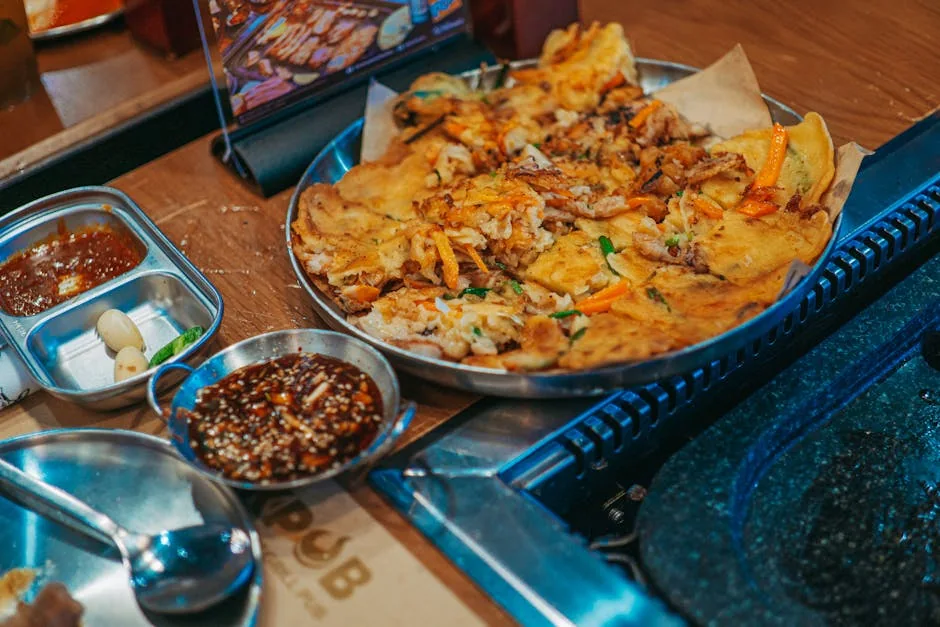
Featured E — Mapo Jeong Daepo (Gongdeok, charcoal-grilled galmaegisal legend)
Mapo Jeong Daepo is the foundational Mapo-area charcoal-grill BBQ destination, specialising in marinated galmaegisal — pork skirt — and operating in the Gongdeok cluster since the 1980s. The address is on Dohwa-gil in Mapo-gu, near Gongdeok Station Exit 8, and the price range sits at KRW 30,000 to 50,000 per person (approximately USD 23 to USD 38). Operating hours run 16:00 to 02:00 daily, which makes Jeong Daepo a viable late-evening option for travellers whose Gangnam or Jung-gu day extends past most kitchens' last orders. The restaurant style is the version of Korean BBQ the Mapo neighbourhood is identified with in domestic Seoul food culture: dim-lit, smoke-heavy from the charcoal grills, wood-panelled and faintly worn, with galmaegisal and ggotsal as the marquee cuts rather than the more visitor-familiar samgyeopsal or galbi. English menus are available, but the staff orientation is domestic-Korean by default; international visitors should be comfortable with point-and-order intake. For travellers anchored in Hongdae, Hapjeong, or western Seoul more broadly, Jeong Daepo is the Mapo-style BBQ reference. Source: Korea Herald Seoul BBQ feature, VisitKorea.
Featured F — Mongtan (Samgakji, wood-fired contemporary BBQ)
Mongtan is the contemporary wood-fired Korean BBQ specialist most consistently profiled in international food press across the past five years, located at 50 Baekbeom-ro 99-gil, Yongsan-gu, in the Samgakji and Hyochang-dong area near Samgakji Station Exit 8 — accessible from Myeongdong on subway Line 4. The price range sits at KRW 60,000 to 120,000 per person (approximately USD 45 to USD 90), which places Mongtan in the upper-premium contemporary tier alongside Byeokje Cheongdam, but with a meaningfully different culinary register: wood-fired woogeori and woo-samgyeop are the marquee cuts, the grill workflow runs on charred-wood smoke rather than on charcoal or gas, and the restaurant style reads as contemporary-Seoul rather than as institutional hanwoo. Operating hours run 17:00 to 23:00 by reservation only; phone bookings or Tablling-app queue slots are essential, and walk-in is effectively not viable on most evenings. The international press visibility — Eater Seoul, Tatler Asia, Time Out Seoul — has produced a reservation dynamic that books out three to six weeks in advance during peak tourism seasons. English menus and staff are available. For the family-travelling reader building a single milestone-dinner reservation into the trip, Mongtan is the contemporary wood-fired option that pairs with Byeokje Cheongdam as the institutional one. Source: Eater Seoul best-restaurants map, Tatler Asia dining, Time Out Seoul.
Featured G — New Village / Saemaul Sikdang Gangnam (casual pork-BBQ chain)
Saemaul Sikdang is the casual pork-BBQ chain counterpart to the hanwoo grill houses, founded by celebrity restaurateur Baek Jong-won, and the Gangnam-area branches anchor the night-eating belt around Gangnam Station with a vintage Korean-village interior style. The price range sits at KRW 12,000 to 25,000 per person (approximately USD 9 to USD 19), which makes Saemaul the entry-tier option for first-timer Korean-BBQ visitors who want the format without the premium-hanwoo price commitment. Operating hours run 11:30 to 23:30 daily across Gangnam Station-area branches; reservations are not typically taken, and the queue dynamic varies by branch. Picture menus and English-friendly intake remove most of the language-friction layer for international guests. The marquee dishes are 7-cm samgyeopsal and yeoltan bulgogi rather than premium hanwoo galbi; the format reads as the casual-evening option for travellers who want one Korean BBQ meal at chain-grade pricing rather than as a milestone-meal address. For Gangnam-anchored evenings where the budget profile is mid-tier, or for groups with mixed Korean-BBQ experience levels, Saemaul Sikdang Gangnam is the reliable casual option. Source: Visit Seoul Korean BBQ guide 2025, Cookly Seoul BBQ list.
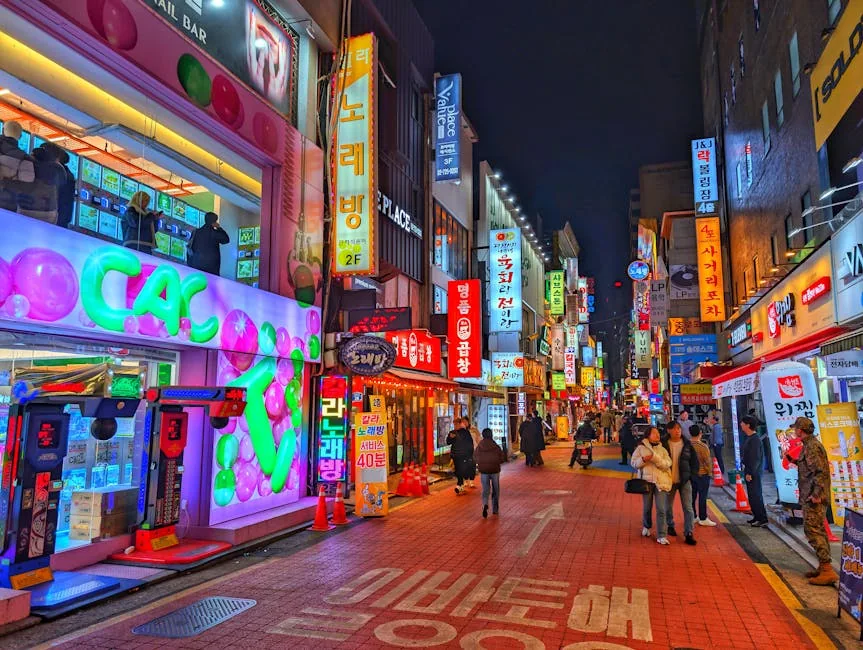
Featured H — Saebyeokjip Cheongdam (24-hour late-night hanwoo)
Saebyeokjip is the 24-hour Korean BBQ and seonjiguk specialist widely cited in international travel media for late-arrival or late-evening dining needs. The verified main branch is in the Cheongdam-dong cluster of Gangnam-gu, subway-accessible across Seoul through Line 7, and operates 24 hours daily with no reservation system. The price range sits at KRW 30,000 to 60,000 per person (approximately USD 23 to USD 45), which places Saebyeokjip in the mid-premium hanwoo tier — below Byeokje, above mid-tier charcoal-grill addresses. The marquee dishes are raw beef yukhoe, hanwoo galbi, and seonjiguk (cow-blood soup), and the operational profile is the version of Korean BBQ most useful for travellers whose flight schedule, treatment schedule, or itinerary friction has pushed the dinner window past most kitchens' last orders. English menus are available, and the staff orientation is accustomed to international late-night intake. For travellers staying near Myeongdong or Jung-gu whose evening has run late, Saebyeokjip Cheongdam is the address that remains open when the rest of the city has closed. Source: Time Out Seoul, Visit Seoul.
Featured I — Wooraeoak (Jung-gu, Pyongyang-origin bulgogi and naengmyeon since 1946)
Wooraeoak is one of the most historically continuous Korean restaurants operating in Seoul today, founded in 1946 by Pyongyang-origin operators and located at 62-29 Changgyeonggung-ro, Jung-gu, in the Euljiro-north cluster. The marquee dishes are bulgogi cooked tableside on a copper dome and Pyongyang-style naengmyeon; the MICHELIN Guide Seoul has listed Wooraeoak in the Bib Gourmand category across multiple guide cycles. The price range sits at KRW 30,000 to 60,000 per person (approximately USD 23 to USD 45), with the bulgogi sets running toward the upper end of the range and the naengmyeon-anchored lunch order running toward the lower end. Operating hours run 11:30 to 22:00 with a 15:00 to 17:00 break, closed Mondays; reservations are not typically taken, and weekend lunch queues can run 45 to 90 minutes. English menus are available, and the staff are accustomed to international intake. The restaurant style reads as living-heritage Seoul: the room layout, the table service workflow, and the bulgogi-and-naengmyeon menu architecture have changed minimally across the post-war decades, and the visit functions as a culinary-history reference as much as a meal. For travellers anchored in Jung-gu, or for any reader interested in the Pyongyang lineage of Seoul Korean cuisine, Wooraeoak is the foundational address. Source: VisitKorea, MICHELIN Guide Seoul, Visit Seoul.
Featured J — Yeoksam Daewangsutbul Galbi (charcoal-grill galbi in Gangnam)
Yeoksam Daewangsutbul Galbi is a charcoal-grilled galbi reference in the Yeoksam cluster of Gangnam-gu, commonly recommended for visitors splitting itinerary time between Myeongdong and Gangnam — the address sits on subway Line 2 between Gangnam Station and Seolleung Station, and is reachable from Myeongdong through a Line 4 to Line 2 transfer. The price range sits at KRW 30,000 to 50,000 per person (approximately USD 23 to USD 38), which places the restaurant in the mid-premium charcoal-galbi tier — below the institutional hanwoo houses, above casual chain pork-BBQ. Operating hours run 12:00 to 24:00, which makes Daewangsutbul viable for both late-lunch and late-evening windows. The format is charcoal-grill galbi in a busy, mid-formal room — the version of Korean BBQ most familiar to domestic-Korean diners, with table-side grilling, banchan service, and a marinade-and-grill workflow that international visitors should be comfortable participating in rather than expecting the server to manage. English menus are available. For Gangnam-anchored evenings in the mid-tier budget range, or for travellers who want a charcoal-grill galbi experience without committing to the Byeokje or Samwon Garden premium tier, Daewangsutbul is the reliable mid-premium option. Source: VisitKorea, Visit Seoul.
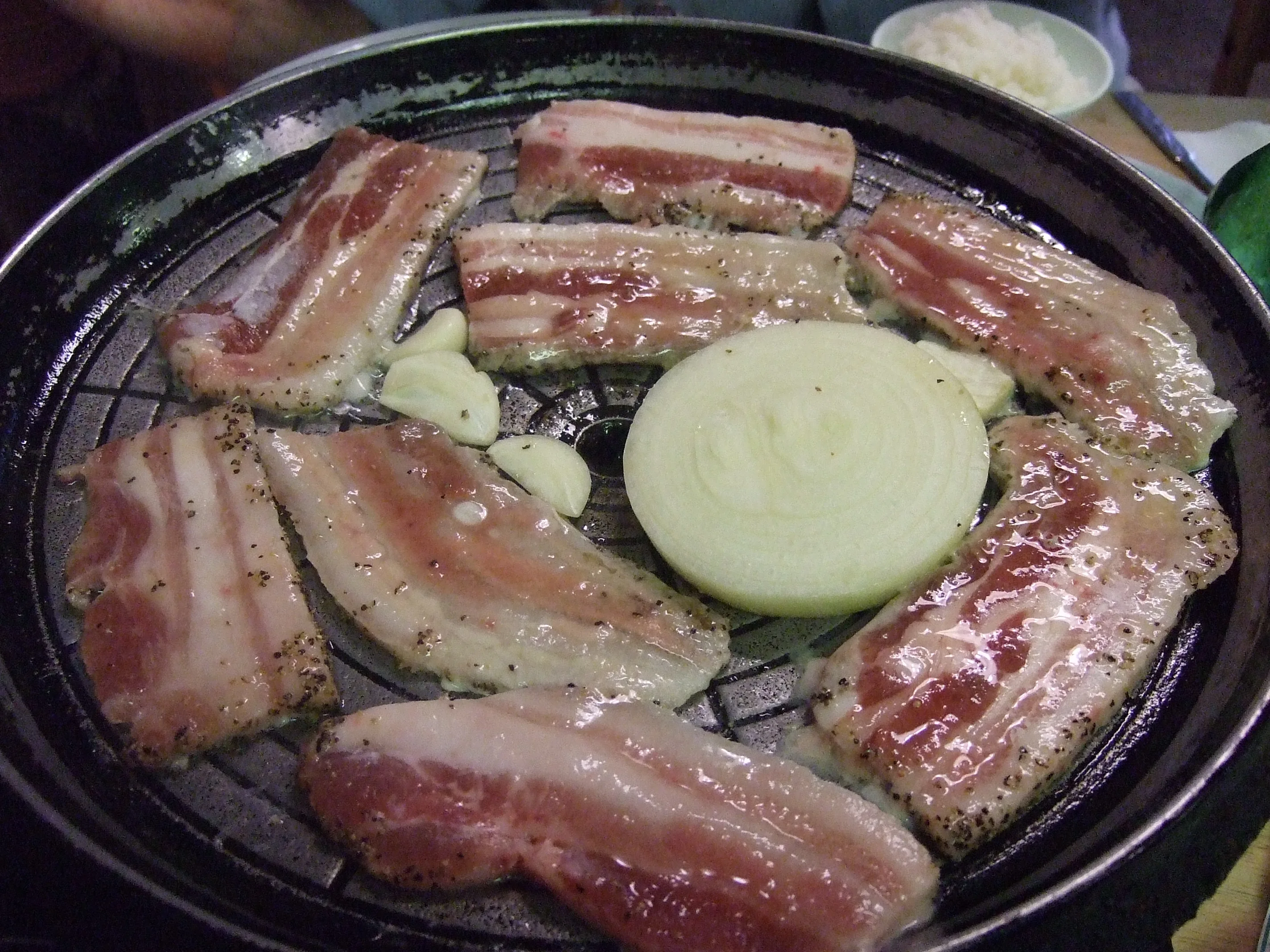

Korean BBQ category map — how to read the ten entries against your trip
The ten entries above sit across four useful planning categories. Institutional hanwoo galbi houses with multi-decade lineage: Samwon Garden (Apgujeong, since 1976), Byeokje Galbi Cheongdam (vertical supply), Wooraeoak (Jung-gu, since 1946 — primarily bulgogi rather than open-grill galbi, but in the institutional category). Premium contemporary dry-aged or wood-fired addresses with strong international press visibility: Geumdwaeji Sikdang (Sindang, dry-aged samgyeopsal), Mongtan (Samgakji, wood-fired woogeori). Mid-tier charcoal-grill addresses for casual mid-budget evenings: Yeoksam Daewangsutbul Galbi (Gangnam charcoal galbi), Maple Tree House Itaewon (foreigner-friendly hanwoo), Mapo Jeong Daepo (Mapo galmaegisal legend). Late-night and casual specialists: Saebyeokjip Cheongdam (24-hour hanwoo), Saemaul Sikdang Gangnam (casual chain pork-BBQ). The family-travelling reader anchoring multiple Seoul days should typically build one milestone-tier meal (Samwon Garden or Byeokje Cheongdam or Mongtan) into the trip and use the mid-tier and casual addresses for the other evenings. Single-meal Seoul visitors should choose by neighbourhood-of-stay rather than by category, and let the proximity decision drive the budget tier.
Pricing geography across the ten entries
Pricing across the ten entries reflects four tiers. The casual chain pork-BBQ tier sits at KRW 12,000 to 25,000 per person (USD 9 to USD 19) — Saemaul Sikdang Gangnam is the representative address. The mid-tier charcoal-grill range sits at KRW 25,000 to 50,000 per person (USD 19 to USD 38) — Geumdwaeji Sikdang, Yeoksam Daewangsutbul, Mapo Jeong Daepo, Saebyeokjip Cheongdam, and Wooraeoak's lower-end orders all sit in this range. The upper-mid premium tier sits at KRW 40,000 to 80,000 per person (USD 30 to USD 60) — Samwon Garden and Maple Tree House Itaewon are the representative addresses. The premium tier sits at KRW 60,000 to 200,000 per person (USD 45 to USD 150) — Byeokje Galbi Cheongdam and Mongtan are the representative addresses. The pricing geography reflects three underlying inputs: the hanwoo grade (1++ versus mid-grade hanwoo versus pork), the supplier-relationship documentation (vertical-supply houses charge a premium), and the room-format intensity (private-room and reservation-only formats charge a premium over open-floor walk-in formats). The editorial position on pricing is that the band differences are genuine and reflect real underlying differences in supply and service, but that no traveller should choose by price alone — the right address for any given evening is the one closest to where you are anchored, in the budget tier that matches the meal occasion.
Reservation logistics for international travellers
The reservation logistics across the ten entries fall into three patterns. Phone or NaverPlace reservation: Samwon Garden (+82-2-548-3030), Byeokje Galbi Cheongdam (+82-2-548-0085), Maple Tree House Itaewon, Mongtan. The Tablling app queue-slot pattern: Geumdwaeji Sikdang is the standard reference here, and several other premium addresses now use Tablling as their primary intake system. Walk-in or no-reservation: Saemaul Sikdang Gangnam, Saebyeokjip Cheongdam, Mapo Jeong Daepo, Yeoksam Daewangsutbul Galbi, Wooraeoak. International travellers should arrange Tablling-app access ahead of arrival in Korea (the app's English support has improved over the past two years but remains imperfect), and should consider asking a Korean-speaking contact — a KHIDI-registered facilitator institution, the hotel concierge, or the clinic's international coordinator — to handle the phone-reservation step for the premium addresses where the language-friction layer is highest. Reservation windows for the premium tier addresses run three to six weeks in advance during peak tourism seasons; same-day walk-in for Geumdwaeji or Mongtan is effectively not viable. The editorial position is that one or two milestone reservations should be locked before the trip; the casual and mid-tier addresses can be left as flexible day-of choices.
“Seoul Korean BBQ is not one cuisine but four tiers and four neighbourhood clusters; the family-travelling reader should pick by where they are anchored and what occasion the meal is for, not by a single 'best-of' ranking.”
Frequently asked questions
Which of these ten Seoul Korean BBQ restaurants is the right milestone-meal choice for a first Korean trip?
Samwon Garden, Byeokje Galbi Cheongdam, or Mongtan are the three most consistently recommended milestone addresses. Samwon Garden is the institutional choice with the longest lineage; Byeokje Cheongdam is the vertically integrated premium hanwoo address; Mongtan is the contemporary wood-fired option most profiled in international press. All three require advance reservation, sit in the premium-tier price range, and are not viable as walk-ins during peak season.
How do hanwoo galbi, samgyeopsal, and galmaegisal differ across these ten addresses?
Hanwoo galbi is premium Korean beef short ribs, central to Samwon Garden, Byeokje Cheongdam, Maple Tree House, Yeoksam Daewangsutbul, and Saebyeokjip Cheongdam. Samgyeopsal is pork belly, central to Geumdwaeji Sikdang and Saemaul Sikdang. Galmaegisal is pork skirt, central to Mapo Jeong Daepo. The choice across the cuts is a personal preference and budget call: hanwoo galbi runs at the premium end, samgyeopsal at the mid range, galmaegisal at the mid-to-low range.
Are these addresses suitable for travellers with limited Korean-language ability?
Yes. Maple Tree House Itaewon offers the most comprehensive multilingual support — English, Japanese, and Mandarin menus and staff. Samwon Garden, Byeokje Cheongdam, Geumdwaeji Sikdang, Mongtan, and Wooraeoak all offer English menus and have working international-tourist familiarity. Saebyeokjip Cheongdam, Saemaul Sikdang Gangnam, and Mapo Jeong Daepo run more domestic-Korean orientations; English menus exist but staff intake is point-and-order rather than service-led English. For the friction-free first-timer experience, Maple Tree House is the most reliable choice.
Which restaurants are open late or 24 hours for travellers with shifted dinner windows?
Saebyeokjip Cheongdam operates 24 hours daily with no reservation system. Mapo Jeong Daepo runs 16:00 to 02:00 daily — a viable late-evening option. Saemaul Sikdang Gangnam runs 11:30 to 23:30 daily. Yeoksam Daewangsutbul Galbi runs 12:00 to 24:00. The premium addresses (Samwon Garden, Byeokje Cheongdam, Geumdwaeji, Mongtan, Maple Tree House) typically close kitchens between 22:00 and 22:30. Travellers whose flight or treatment schedule shifts the meal window past 22:00 should anchor on Saebyeokjip, Jeong Daepo, or the casual chain options.
How does Seoul Korean BBQ pricing compare against international peer cities?
Premium-tier Seoul hanwoo BBQ at KRW 80,000 to 200,000 per person (USD 60 to USD 150) compares favourably against premium Tokyo wagyu yakiniku at JPY 12,000 to 25,000 per person (USD 80 to USD 165) and Hong Kong premium BBQ at HKD 600 to 1,500 per person (USD 75 to USD 190). Mid-tier Seoul Korean BBQ at KRW 25,000 to 50,000 per person (USD 19 to USD 38) sits roughly 30 to 50 percent below comparable Tokyo or Hong Kong mid-tier grill pricing. The pricing-geography differential is genuine and one of the underlying reasons Seoul has become a leading East Asian food-tourism destination.
Is there a Korean BBQ option compatible with the post-treatment dietary considerations after a regenerative-dermatology IV course?
Most Korean BBQ menus include lighter options — naengmyeon, doenjang stew, vegetable banchan, kimchi-jjigae — that work as a moderate-intensity meal during a multi-day Korean clinical itinerary. Wooraeoak's bulgogi-and-naengmyeon combination is the most consistently recommended lighter option in this guide. The senior physician administering the IV course should be consulted on day-by-day intake during the active-treatment window; the editorial position is that one moderate-intensity Korean BBQ meal during a treatment week is typically compatible with most regenerative protocols, but heavy late-night sessions in the immediate 48-hour post-IV window are generally not recommended.
How does the Korean BBQ scene fit into a family-travelling Korean medical-tourism itinerary?
Family-travelling itineraries built around a Korean regenerative-dermatology IV course typically anchor in Seoul for five to seven days, with treatment days clustered in the first half and recovery and cultural-tourism days in the second half. Korean BBQ meals fit naturally into the cultural-tourism days rather than into the active-treatment days. The editorial position is that families should plan one milestone-tier reservation (Samwon Garden, Byeokje, or Mongtan) for the trip's anchor evening, and use the mid-tier and casual addresses for the other Korean BBQ meals across the week.
Where can the family-travelling reader find more on Korean regenerative dermatology and aftercare context that pairs with this Seoul food guide?
Korea Stem Cell publishes editorial coverage of Korean regenerative-dermatology clinics and supplier landscape at the country level. For the family-tourism planning frame including multi-city itineraries, see <a href="/family-medical-tourism-stem-cell/">family medical-tourism stem cell planning</a>. For the pricing geography that pairs with the BBQ-pricing comparisons above, see <a href="/stem-cell-pricing-korea-by-tier/">Korea stem cell pricing by tier</a>. For the multi-city Seoul–Busan–Jeju comparison, see <a href="/stem-cell-korea-cities-compared/">Korea cities compared</a>.